My Father’s Space Age
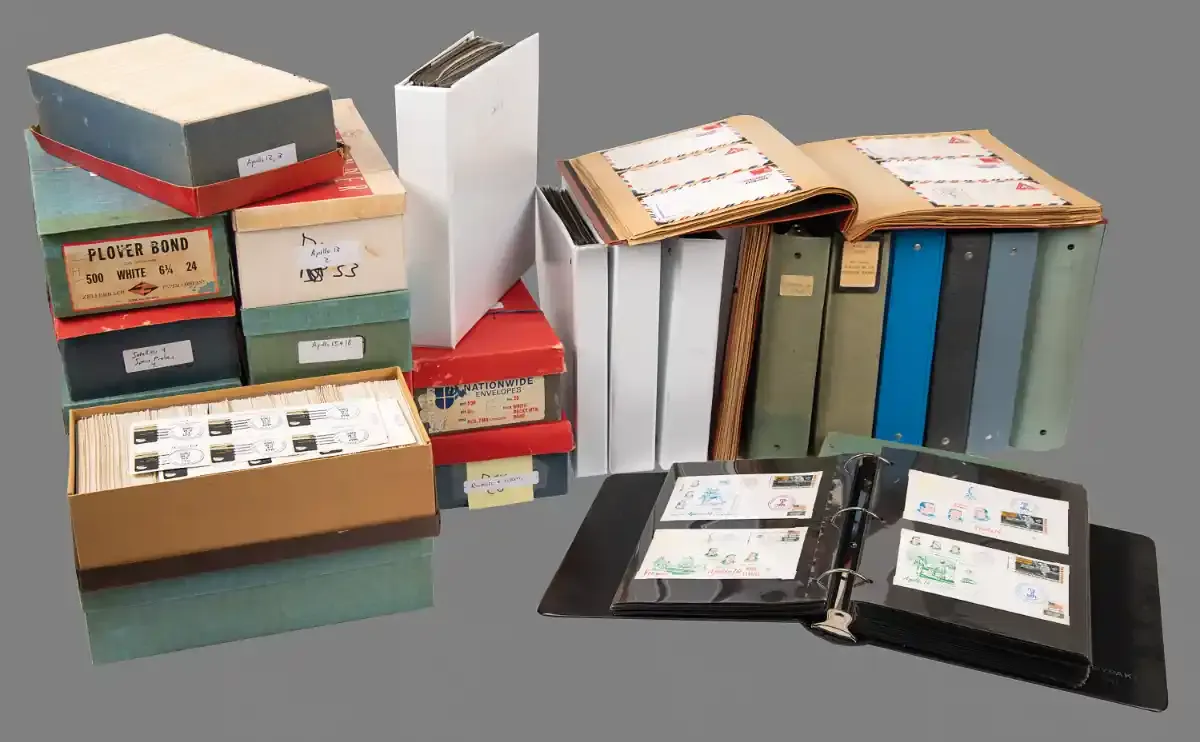
My father, Klaus Krause, celebrated the Space Age as it was happening. To him, the technological advances of the 1960s were a sign of human progress and hope. He had seen the opposite as a child, having fled the despair of post-war Germany with his family. There, things getting better meant less rationing. In post-war America, it meant a car, a house, and going to the moon. As a collector of stamped postal envelopes related to space events, Klaus accumulated an unusual documentary record of the Space Age’s achievements. Eventually totaling 10,000 items, his collection reflected how he saw America at its best.
American Dreams
If you were a boy in post-war Germany, you didn’t collect coins or stamps; you collected scrap metal. Such was the world ten-year-old Klaus left behind in 1951. His family came to America with nothing, but they worked hard: his mother at a clothing store, his father at a factory, and Klaus in public school and the Boy Scouts. In a story straight from the American Dream, the family went on to own a small home in a Los Angeles suburb, and Klaus went off to UC Berkeley to study physics in 1960.
That was three years after the Soviet Union had launched Sputnik, the first artificial satellite to orbit the earth. In response, the United States mobilized young people to study science and engineering. A natural at technical thinking, Klaus was on board.
In 1964, Klaus received his undergraduate degree in physics from Berkeley. As a part-time job, he helped operate Berkeley’s particle accelerator. But rather than continue graduate studies in physics, he got a master’s degree in English, also from Berkeley. He later said that advanced physics research at Berkeley was coming increasingly under the pull of the national weapons lab in nearby Livermore. That was not the science he wanted to do.
After Berkeley, Klaus served in the Air Force from 1966 to 1970, teaching English to cadets at the Air Force Academy in Colorado. Although he had left physics behind, he maintained a love of the Space Age’s scientific and technological progress. He remained inspired by John F. Kennedy’s 1962 speech at Rice University, “We Choose to Go to the Moon”:
For the eyes of the world now look into space, to the moon and to the planets beyond, and we have vowed that we shall not see it governed by a hostile flag of conquest, but by a banner of freedom and peace. We have vowed that we shall not see space filled with weapons of mass destruction, but with instruments of knowledge and understanding.
Klaus was aware that America’s moon effort was not purely idealistic. But American idealism was nevertheless a beacon to him and many others who came here for a better life.
As the Space Age played out in the 1960s, Klaus was among a group of collectors who ended up documenting those extraordinary times in an extraordinary way.
Astrophilately
Astrophilately (astro-fih-LAT-uh-lee) means collecting stamped envelopes postmarked at a time and place connected to an important space-related event. Envelopes often also have a “cachet,” a decorative insignia or design associated with the event. Collectors call the whole thing—envelope, stamp, cachet, and postmark—a “cover.”
The postmark is the hard part. To get one, an envelope must already be at the right place when the event happens.
The concept is best understood by examples from Klaus’ collection.
Explorer 1
Explorer 1 was the United States’ first successful satellite launch:
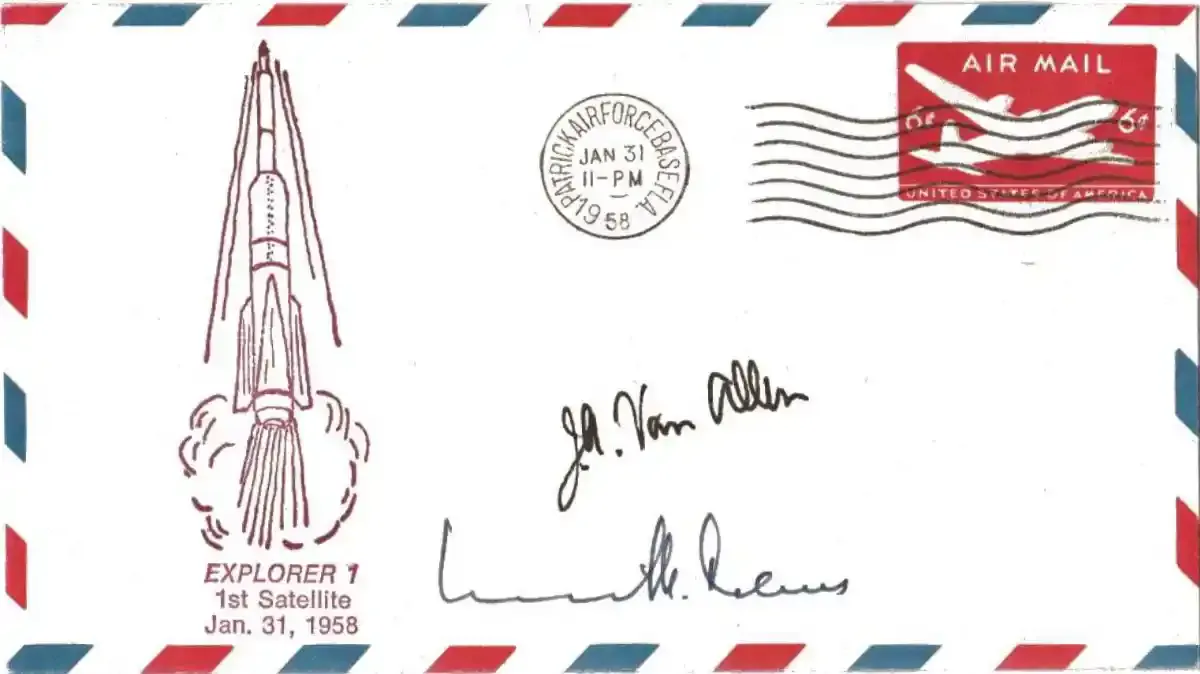
The cachet at left depicts the launch vehicle and identifies the event, while the postmark at upper center records Patrick Air Force Base, Florida, at 11 p.m. on the night of the launch, January 31, 1958. Patrick was the headquarters and support base for the nearby Cape Canaveral missile range, and Explorer 1 had lifted off at 10:48 p.m. The signatures add another layer of connection to the event: James Van Allen designed the mission’s principal scientific experiment, which led to the discovery of the Van Allen radiation belts, and Kurt Debus was the launch director.
X-15
When he became the first man to step on the moon in 1969, Neil Armstrong was the most celebrated person in the world. After the mission, everyone wanted his autograph. But here it is from seven years earlier, commemorating one of his test flights in the X-15 rocket plane.
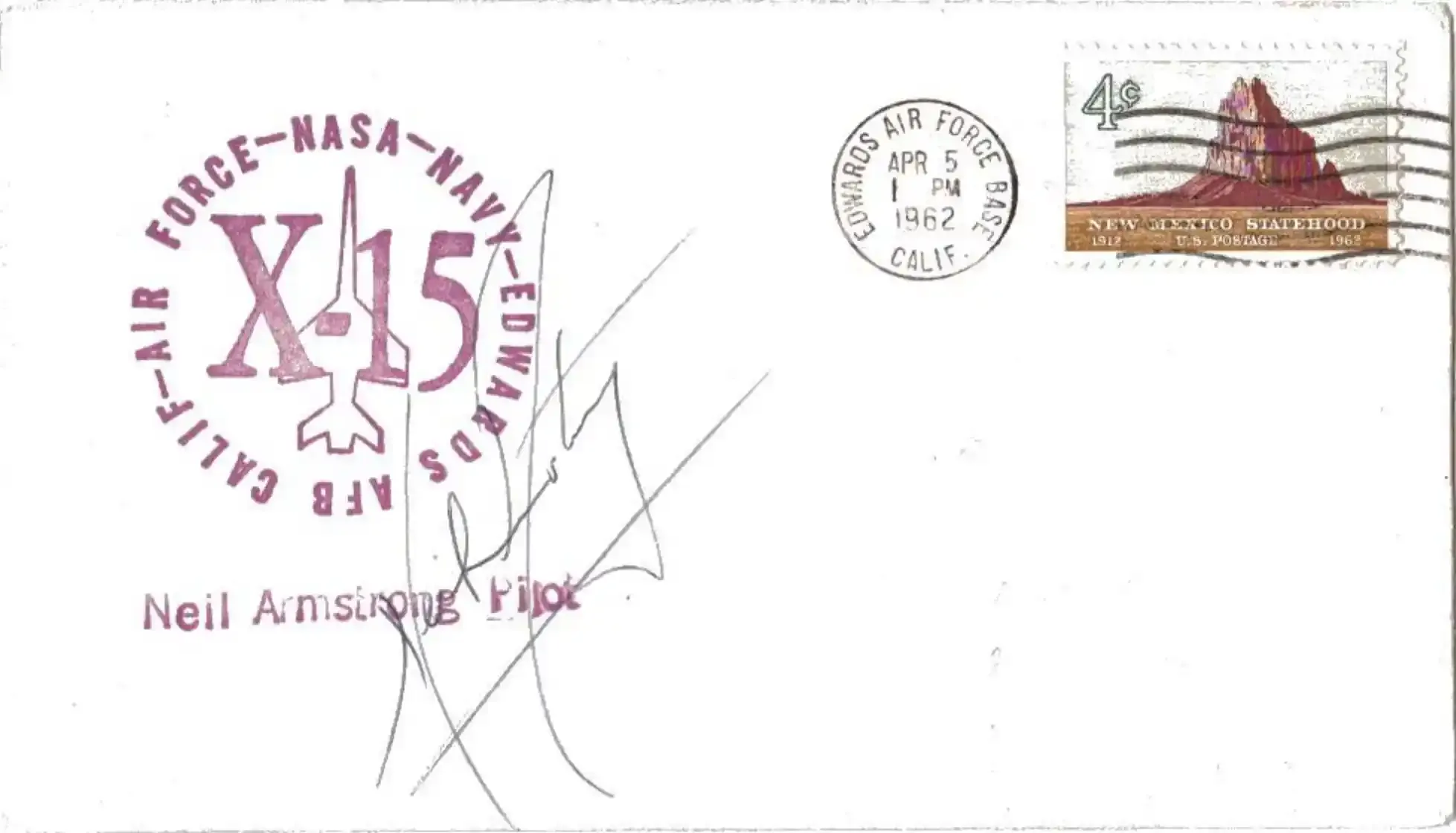
The postmark is from Edwards Air Force Base, where the flight originated.
Apollo 11
The peak of astrophilately was Apollo 11 in July 1969. Klaus had more than a thousand Apollo 11 covers with myriad permutations of cachet, stamp, and postmark (at the launch site, at each tracking station from around the world, on the recovery ship, from the astronauts’ hometowns, and so on). Here’s a standout example:
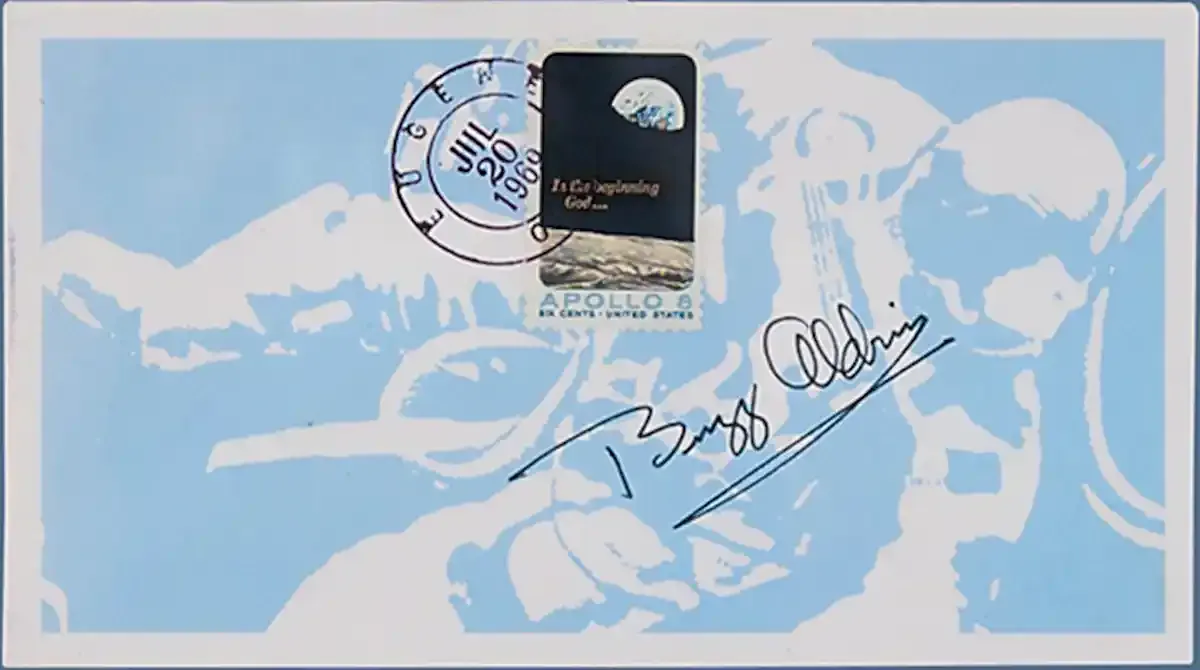
We have:
- The signature of Buzz Aldrin, Apollo 11 astronaut and second man on the moon.
- An unusual full-envelope cachet, likely of Buzz Aldrin’s November 1966 spacewalk during the Gemini XII mission.
- A postmark date of July 20, 1969: the day Armstrong and Aldrin landed on the moon.
- A postmark location of Eugene, Oregon. Aldrin was born Edwin Eugene Aldrin Jr.
- An Apollo 8 stamp, commemorating the first manned space mission to circle the moon. Issued that May, the stamp features the “earthrise” photo from that mission. There would later be Apollo 11 stamps, but not at the time this envelope was postmarked.
Keep in mind this was once just an envelope. Now it is a small historical document, with its own angle on the moment and the man.
Boeing 747
Space was the core of Klaus’ collection, but it also included aviation and naval events. For example, the first flight of the Boeing 747 was in 1969:
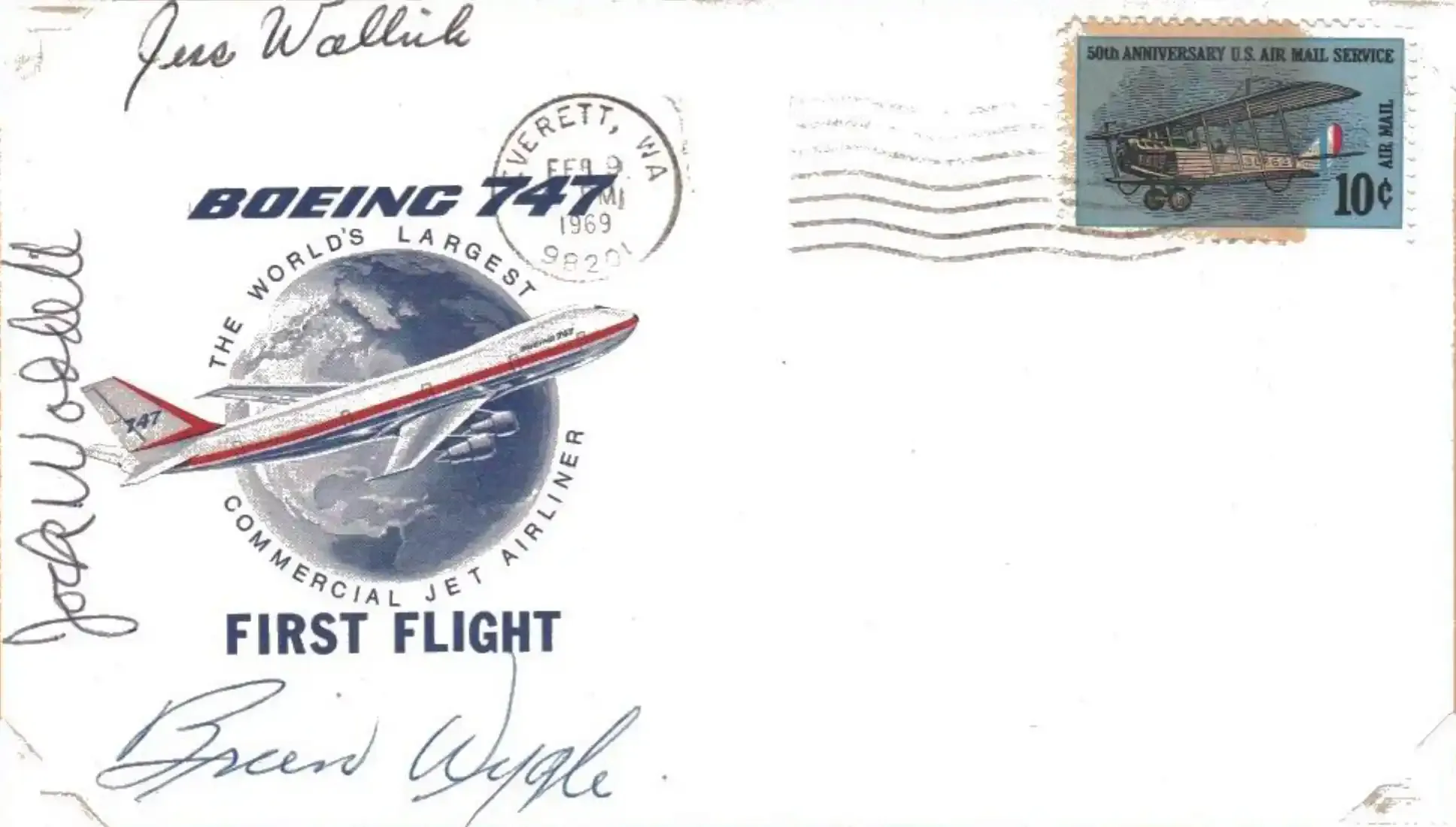
Here we have the signatures of pilot Jack Waddell, co-pilot Brien Wygle, and flight engineer Jess Wallick. The postmark is from Everett, Washington, home of the Boeing plant and origination point of the flight. Maiden flights like this one symbolized continuing progress toward a future of faster, farther, and easier travel.
Progress
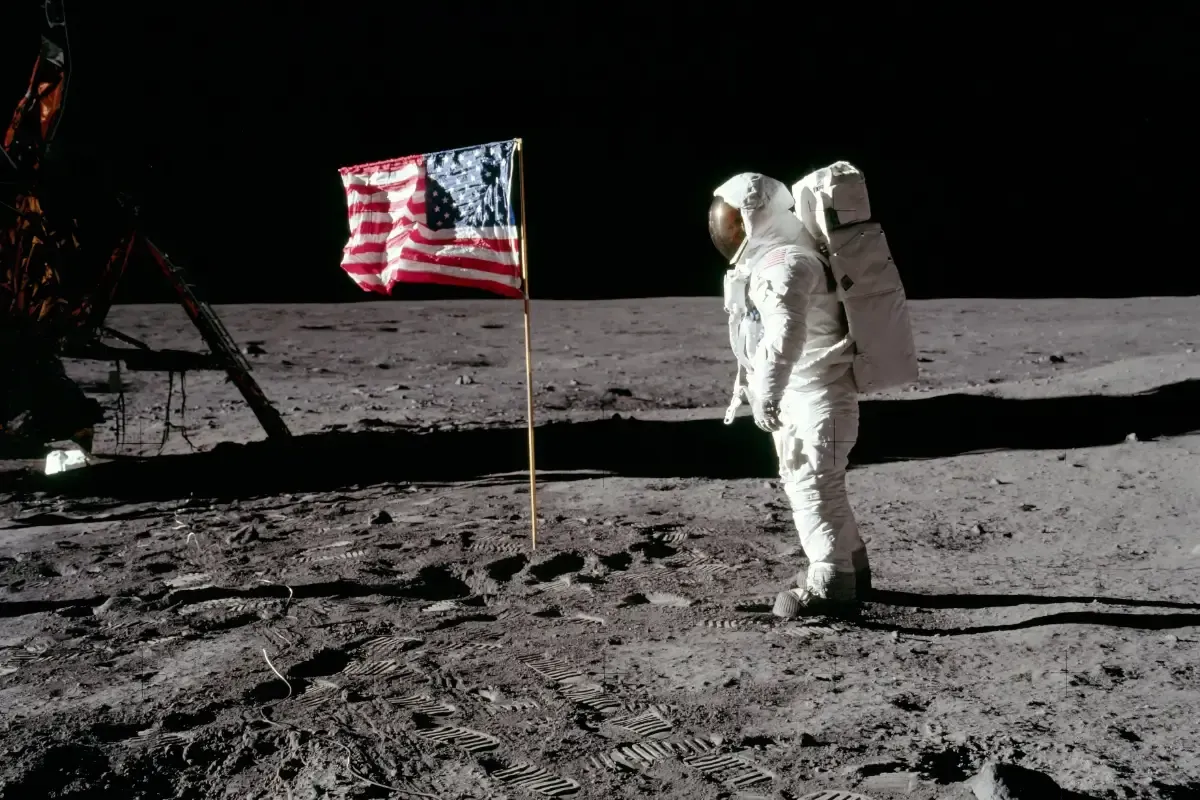
Much else was happening in the 1960s, not least Vietnam, racial and campus unrest, and assassinations. Amid all this, the wonders of the Space Age gave a scrap-collecting German boy—who never really left my dad—something to believe in and, through astrophilately, to be part of. His new country had many challenges, but it could also aspire to great things and, sometimes, achieve them.
Epilogue
With the end of the moon missions in 1972, Klaus mostly ended his space collecting. By the time I was old enough to understand it, much later, the collection had long been stored away in boxes. I knew of it, but not its extent or significance.
Klaus died in 2020, leaving behind his wife of 54 years, Ann, and me. It was only in 2024, when my mom tasked me with finding the collection a new home, that I really investigated it. In doing so, I ran into many things I wished I could have asked my dad—like how he got envelopes flown aboard a Vomit Comet weightless-training aircraft in 1969 with astronauts Alan Bean and Charles Conrad, signatures included; or how he acquired not just a piece of Apollo 8’s flotation collar but one postmarked on the recovery date, by the recovery ship. I suspect he had just mentally filed away all that effort, like the boxes themselves.
My mom’s priority was for the collection to end up with someone who could appreciate it. In that, we succeeded. It’s now in the hands of a serious collector who bought it at auction. Klaus would be happy.
May his Space Age live on.